From the remote controls and torches of everyday households to the lithium-ion cells that run electric vehicles and store renewable energy on a grid scale, batteries are at the heart of the modern green transition.
Yet when those batteries reach end-of-life and aren’t recycled correctly, their hidden costs compound environmentally, economically and socially. Reclite SA believes that responsible battery management must be part of any credible green-economy strategy. For the strategy to remain green here are the factors to consider.
Toxic legacy and persistent pollution
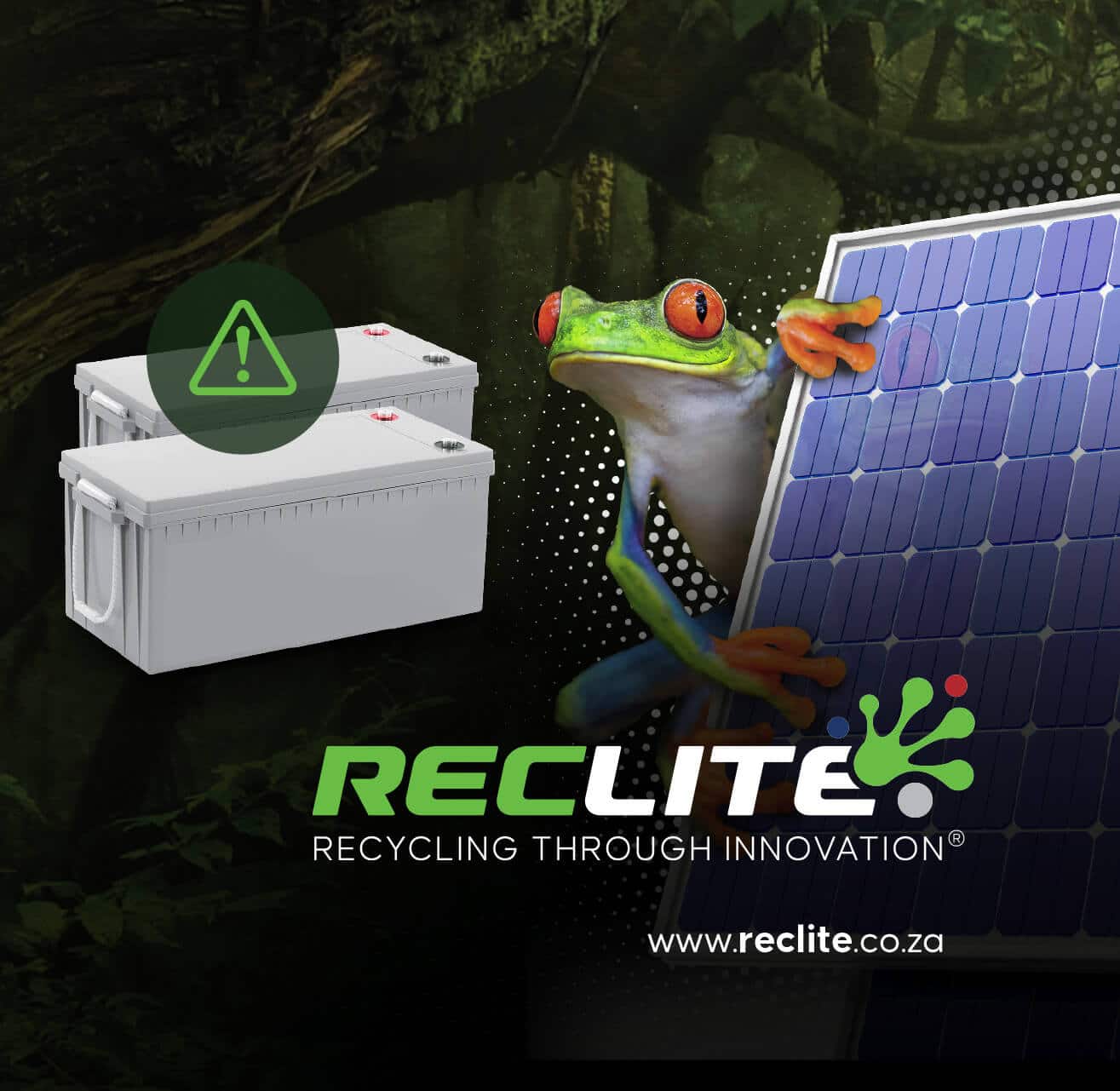
Batteries contain valuable metals like lead, nickel, cobalt, lithium and manganese, but they also contain toxic and persistent substances. When batteries are dumped in landfill or incinerated, toxic corrosive electrolytes and heavy metals can leach into soil and groundwater or release harmful particulates and gases into the atmosphere. Lead-acid batteries, still widely used in automobiles and backup systems, are notorious for contaminating local waterways and agricultural land when poorly managed. Lithium-ion cells, if burned or crushed uncontrolled, can release fluorinated compounds and heavy metal traces. The result is not simply a short-term contamination event: these substances persist in ecosystems, bioaccumulate up food chains and can impair biodiversity and human health for decades.
Public health impacts: Often visible, always serious
Communities living near informal recycling operations or unregulated dumps bear the brunt. Informal battery “recyclers” often employ crude techniques like open burning, acid baths, manual crushing, that expose workers and nearby residents to toxic dust and fumes. Children are particularly vulnerable: lead exposure is linked to reduced cognitive development, behavioural disorders and chronic illness. The human cost of such pollution is both tragic and expensive, placing long-term burdens on healthcare systems and undermining social equity in affected communities.
Resource loss
and circular-economy failure
Fire and safety risks
Every battery that’s landfilled is a lost opportunity. Metals like cobalt and nickel are finite, and the mining of these minerals carries major environmental and ethical concerns. Recycling batteries recaptures these materials, reduces the need for fresh mining, lowers the carbon footprint of battery production and keeps value circulating within the economy. Poor recycling practices squander this resource value and make the green transition more costly, both financially and in terms of carbon emissions.
Decommissioned lithium-ion batteries are not inert. Damaged, punctured, or improperly stored cells can short-circuit and ignite, leading to difficult-to-extinguish fires. Such incidents have occurred in landfills, recycling yards and transport trailers, risking lives, property and emergency-response resources. The long-term consequence of accepting ad-hoc disposal is an elevated public safety risk that strains municipal services and insurance systems.
Economic and regulatory consequences
Neglecting proper battery recycling isn’t free. Contamination remediation, health-care costs, emergency responses to fires, and the loss of recyclable commodities all translate into public and private expense. Moreover, as global regulations tighten, from producer-responsibility laws to stricter hazardous-waste standards, companies and municipalities that lag behind face fines, reputational damage and market exclusion. Conversely, investing in safe, traceable recycling creates jobs, generates secondary material supply chains, and positions local industry to capture value in a circular battery economy.
What responsible management looks like
Effective battery stewardship requires a systems approach. It begins with product design for disassembly and material recovery, extends to clear take-back and collection networks, and demands compliant recycling facilities that employ safe, closed-loop technologies. Crucially, formalising informal recycling sectors through training, safer tools and integration into compliant supply chains, can reduce harm while preserving livelihoods. For industry, extended producer responsibility (EPR) schemes and transparent reporting create incentives for producers to design batteries that are easier to recycle and take accountability to for the products that they produce.
Reclite SA’s perspective
As recyclers and circular economy advocates, we at Reclite SA see both the risk and the opportunity. Batteries will remain central to decarbonisation, but only if their lifecycle is managed responsibly. South African industry, government and civil society must collaborate to grow safe collection, enforce responsible recycling standards, and support technologies that recover a higher proportion of critical metals. Consumers also have a role: disposing of batteries at designated collection points, choosing products from manufacturers with clear EPR commitments, and supporting policies that close the loop.
The true cost of batteries is not measured only at the checkout. If we ignore end-of-life impacts, short-term convenience will translate into long-term environmental harm, public health crises and economic loss. But with the right policies, investments and industry leadership, batteries can instead power a resilient circular economy, one that protects ecosystems, creates local value and secures the social licence of the green transition.
Reclite SA is committed to that future: responsible recycling is not an optional add-on to sustainability, it is its foundation.